Wicked: For Good Box Office Success: Can It Become a Lasting Global Hit?
Spotlight Daily – 21 November 2026
Wicked For Good box office performance turned one of 2025’s most closely watched movie releases into a major commercial event. The second half of Universal Pictures’ two-part adaptation of the Broadway musical opened with an estimated $226 million worldwide and ultimately earned approximately $540.8 million globally, according to Box Office Mojo. Its theatrical run demonstrated the enduring appeal of the Oz story, the star power of Ariana Grande and Cynthia Erivo, and the ability of a stage musical adaptation to attract audiences well beyond its Broadway fan base.
The result was substantial, even if it did not surpass the worldwide total of the first Wicked film. The sequel had to meet unusually high expectations after its predecessor became a breakout hit. Its performance therefore raises a more interesting question than whether it simply made money: what does the film’s box-office journey reveal about the global market for event musicals, franchise storytelling and theatrical spectacle?

SpotlightDaily-Official
Wicked For Good box office: the numbers behind the global release
Box Office Mojo lists the film’s worldwide gross at approximately $540.8 million, made up of about $342.9 million from domestic markets and $197.9 million internationally. The same database lists a production budget of $150 million. Those figures place the sequel among the major commercial releases of its year, although a production budget is not the same as a film’s break-even point: studios also spend on global marketing, distribution and exhibition arrangements, while cinemas retain a portion of ticket revenue.
The film’s opening was especially striking. According to reporting by The Associated Press, Wicked: For Good collected about $150 million in the United States and Canada during its opening weekend and approximately $226 million worldwide. That made it the biggest opening ever for a Broadway musical adaptation at the time, surpassing the first Wicked film’s launch. Reuters also reported the record-setting North American debut and the film’s contribution to a stronger weekend for cinemas.
Opening-weekend figures show the intensity of initial interest, but a film’s final result depends on how well it holds audiences after the first rush. Sequels often benefit from an established fan base, yet they also face the challenge of converting opening curiosity into repeat viewing and positive recommendations. The sequel’s final global total indicates that it retained a meaningful audience across its theatrical run.
Why the sequel carried such enormous expectations
The first Wicked film, released in 2024, built a powerful theatrical foundation. Universal’s official film information says the original became a major global success, earning more than $750 million worldwide and receiving 10 Academy Award nominations, including Best Picture. It won Oscars for costume design and production design. That performance gave the sequel a valuable brand, but it also created a demanding benchmark.
Universal chose to divide the stage musical’s story into two feature films. The strategy allowed the filmmakers to give the second act its own theatrical scale, but it also meant audiences and industry observers would judge the two releases as connected commercial chapters. The sequel needed to feel like a satisfying conclusion while justifying another trip to the cinema for viewers who had already seen the first instalment.
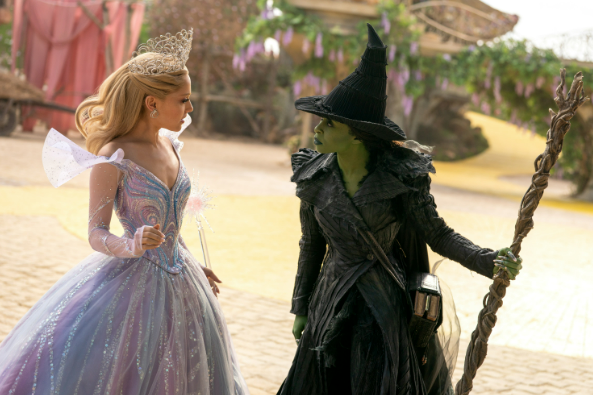
The cast was central to that proposition. Cynthia Erivo returned as Elphaba, while Ariana Grande reprised Glinda. Jonathan Bailey, Jeff Goldblum, Michelle Yeoh and other returning cast members helped maintain continuity. Director Jon M. Chu also returned, giving the two films a consistent visual identity and creative approach.
Star power, music and the appeal of a cinematic event
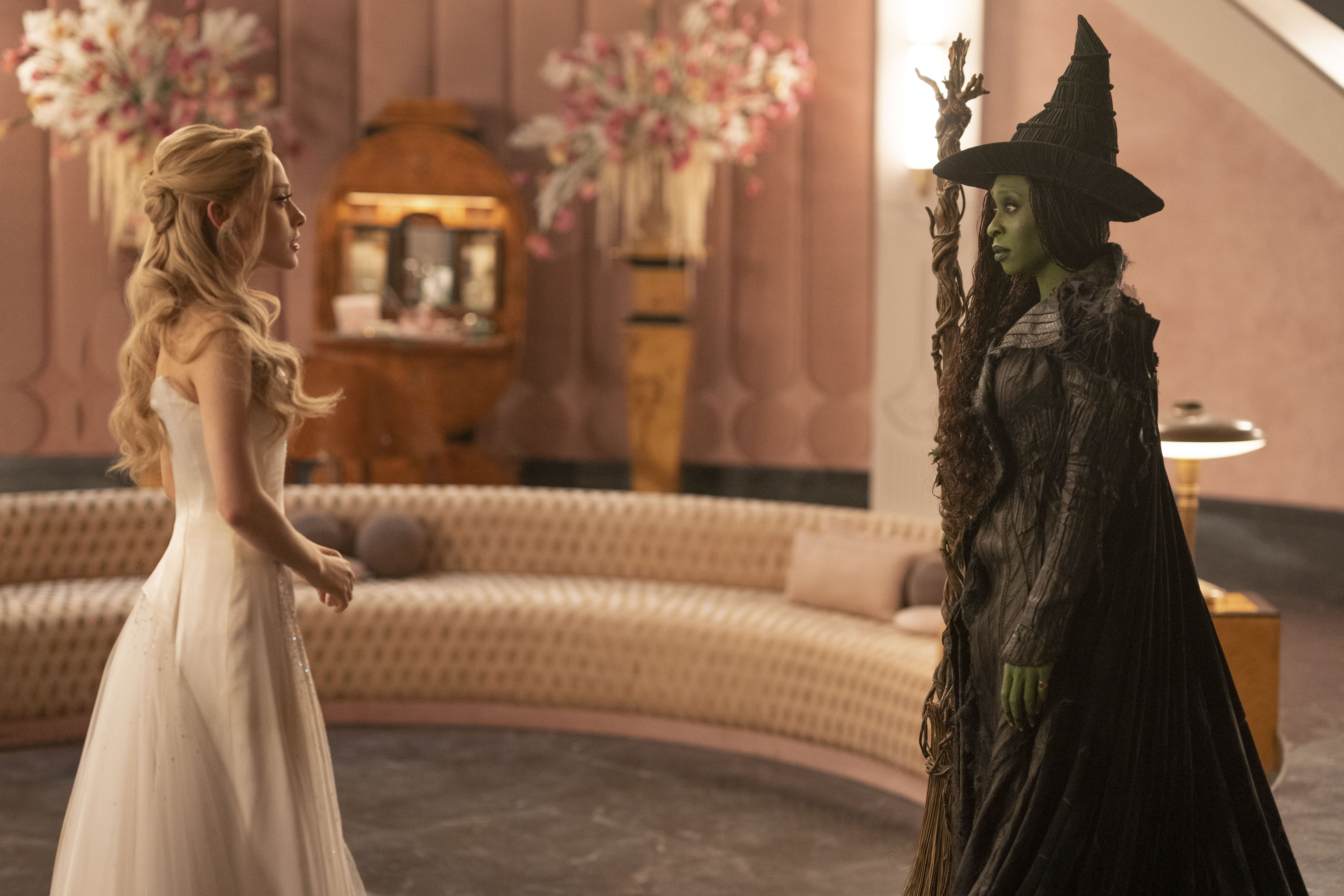
Wicked: For Good was marketed as more than a conventional sequel. Its musical numbers, elaborate costumes, fantasy settings and large-scale production design positioned it as an event for fans of the stage show and moviegoers seeking a theatrical spectacle. The film also benefited from the cultural visibility of its two leads. Grande brought a huge global pop audience, while Erivo’s performance and musical background strengthened the film’s connection to theatre and vocal performance.
The combination matters in an entertainment market where viewers have many alternatives at home. A cinema release needs to offer a reason to leave the living room. Large-format screenings, elaborate production design, collective musical moments and the opportunity to experience a popular story with other fans can all support that decision. The film’s opening weekend suggested that the proposition worked for a substantial audience.
Music also gives the franchise a life beyond the cinema. Songs can circulate through streaming services, social media, fan performances and soundtrack listening long after a theatrical release. That wider cultural footprint can reinforce interest in the film, encourage repeat engagement and keep the property visible between major releases.
International audiences helped make it a global hit
The film’s international gross of nearly $198 million shows that its appeal was not confined to North American audiences. The story’s themes of friendship, ambition, public reputation and moral choice are accessible across markets, while the familiar world of Oz gives viewers an entry point even if they have never seen the Broadway production.
International performance for a musical can be complicated. Songs, humour and cultural references do not always travel in the same way in every territory, and local release schedules can influence how much attention a film receives. A recognisable fantasy world and well-known performers can help overcome some of those barriers. The sequel’s global earnings show that the property had enough recognition to attract a sizeable audience across multiple regions.
However, a worldwide gross should not be treated as proof that the film performed equally well in every country. Box-office totals combine markets with different ticket prices, release dates and audience habits. A closer territory-by-territory analysis would be needed to identify exactly where the film was strongest and where it had room to grow.
Did Wicked: For Good outperform the first film?
Not in worldwide total. Box Office Mojo lists the sequel at approximately $540.8 million worldwide, while Universal has described the first film as having grossed more than $750 million. That comparison is important because it separates a strong commercial result from an outright improvement on the original. The sequel opened bigger in North America, but its final global total was lower than the first film’s reported worldwide earnings.
There are several ways to interpret that difference. The first film introduced the cinematic version of the characters to a broad audience and benefited from the novelty of the adaptation. The second film entered theatres with a built-in fan base but also faced the challenge of concluding the story. Some viewers may have been more interested in the first film’s introduction to Oz than in returning for its second chapter.
That does not make the sequel a failure. Sequels are often measured against the first instalment even when the original has exceeded expectations. A film can earn hundreds of millions of dollars, become a major release and still finish below the exceptional benchmark set by its predecessor. The fairest assessment considers its own budget, market conditions, release strategy and long-term value to the franchise.
Production costs, marketing and what box-office gross really means
The reported $150 million production budget provides a starting point for evaluating the sequel, but it does not tell the full financial story. Major studio films can carry substantial global advertising costs, and cinemas do not transfer every ticket dollar to the distributor. The share retained by theatres varies by market, contract and week of release. For that reason, multiplying the production budget by a simple rule of thumb is not a reliable way to calculate profit.
There are also revenue streams beyond the initial cinema run. Digital rentals and purchases, physical media, subscription streaming agreements, television licensing and soundtrack-related activity can extend a film’s commercial life. The value of a franchise can also include merchandise, live entertainment and future projects. Those additional sources are not all captured in the worldwide theatrical gross.
Universal’s home-entertainment announcement confirmed that the film moved into digital release after its theatrical debut, with physical formats following in early 2026. That transition gave audiences another way to watch the story and extended the film’s presence beyond cinemas.

What the film’s performance says about movie musicals
For years, studios have treated movie musicals as a category with both high potential and considerable risk. A successful stage production does not automatically become a successful film. Screen adaptations need to translate the intimacy and energy of live theatre into a cinematic language that works for audiences unfamiliar with the original show. They also need to persuade viewers that songs and spectacle belong naturally within the story.
The two Wicked films show that a musical adaptation can become a major global release when it combines recognisable intellectual property, strong casting, ambitious production values and a well-planned theatrical campaign. The sequel’s opening record was a particularly visible sign of that demand. Yet the difference between its final gross and the first film’s total also shows that audience enthusiasm has limits and that each instalment must earn its own momentum.
Studios may take confidence from the franchise, but they should not assume that every Broadway property can reproduce the same outcome. Wicked arrived with decades of cultural recognition, a large existing fan community and songs already familiar to many viewers. Those advantages are difficult to duplicate with a less established title.
Can Wicked: For Good become a lasting global hit?
In box-office terms, the film has already established itself as a major global success. Its worldwide total of more than half a billion dollars, record-setting opening for a Broadway adaptation and significant international contribution make that conclusion clear. The more open question is whether it will remain a durable cultural property after the initial release cycle.
That longer-term success depends on how often audiences return to the film, how strongly its songs remain part of popular culture and whether the characters continue to attract new viewers. Home viewing can introduce the story to people who missed the theatrical run, while soundtrack listening and fan communities can keep the film visible. The original stage musical’s longevity gives the screen adaptation a strong cultural foundation.
There is also a legacy question. The two films expanded the audience for Wicked and gave a new generation a cinematic version of Elphaba and Glinda’s story. If the characters and music continue to resonate, the sequel’s importance may be measured not only by its ticket sales but by its contribution to the franchise’s place in global entertainment.

Final verdict: a major hit, with a different story from the original
Wicked: For Good delivered the kind of worldwide box-office result that few musical adaptations achieve. It opened at record levels for a Broadway adaptation and finished with approximately $540.8 million in global ticket sales. Although it did not match the first film’s reported worldwide gross, it remained a substantial theatrical success and demonstrated the commercial strength of the franchise.
Its performance offers a useful lesson for Hollywood: established stories can still bring audiences into cinemas when they are supported by committed performances, memorable music and a genuinely large-scale presentation. But even a major hit should be judged on its own terms rather than only against an exceptional predecessor. For Wicked, the sequel’s biggest achievement may be that it gave the story a global cinematic conclusion while keeping the world of Oz firmly in the entertainment conversation.
Next Article
–Streaming Wars Enter a New Phase as Entertainment Giants Expand Their Content Spending
–Hollywood’s Biggest Studio Shake-Up Reshapes the Future of Film
–BTS Continues Its Global Dominance: What Their Latest Awards Mean for K-Pop